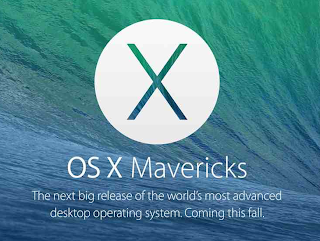
 The big cats have gone, now we welcome a whole new era of OS X. Mavericks. Surf's up! (For those who don't know - Mavericks is a popular surfing destination in California, home to Apple.) OS X has been around for a while and it's good reputation is very high, so to keep the interest alive Apple needed to have something evolutionary up their sleeve. As always, they did - although the UI hasn't changed that much.The Mac software is now super power efficient and mega fast. This is achieved using Timer Coalescing, which groups CPU operations together, allowing more idle time and faster performance. Mavericks reduces activity by 72%, saving much needed battery life. An interesting feature has been added to OS X Mavericks, App Nap. It slows down the app which you're not currently using and which isn't in view (for example, if you paused your music and started using another app), and again, it saves battery life. When you start using the app again, it works as normal and at full speed. App Nap works the same way with tabs in Safari. When you are currently viewing one tab, the others slow down to conserve energy. The best thing is that you don't even notice it.Now, everyone hates it when various adverts are running on a web page, especially if you're not interested. Safari has a solution. The ads don't start playing by themselves, instead, you can choose if you want them to play or not by clicking a bar at the top of an ad. Simple and easy. The new version of OS X has compressed memory, allowing you to have lots of apps open without being deprived of speed at which they run in...
Read more about this on my Apple blog.
Apple's browser, Safari, is one of the most used web browsers in the world - it's in a close competition with Firefox, Chrome and Internet Explorer. Millions of people from around the world use the Internet daily, whether it's for checking the latest news or shopping online; but everyone wants some privacy, don't they? Recently, a group of Safari users have claimed that Google has dodged Safari's privacy settings and installed cookies, which track their movements on the Internet. The cookies enable Google to place appropriate adverts on webpages by looking at which websites an individual has been visiting. This has caused the Safari users to launch a campaign against Google over privacy terms, and one person has gone as far as beginning legal proceedings against the worlds most used search engine.
Google has committed this 'crime' before. In 2012 the US Federal Trade Commission fined them $22.5m for the exact same actions as this time, which of course don't please the public. It looks like the firm haven't learned from their previous mistakes. Google's chairman, Jon Leibowitz, stated that all companies must "keep their privacy promises to customers." Yet THEY breached Safari's privacy terms, making many customers unhappy. If the firm are doing this to Apple's browser, then all the others, like Firefox, must be at risk from this too. Apple might once again send Google to court themselves over this incident, in a battle to prove that Google had not been following Safari's privacy terms, therefore angering the majority of iDevice users. From where things stand at the moment, Google want to prove to the world that they are innocent over this scandal and have only been trying to provide their users with appropriate advertising. However, as everyone knows from past incidents like this, it's better to not get on the wrong side of Apple, as you might find yourself wishing you have never angered the world's leading technology firm.
 The big cats have gone, now we welcome a whole new era of OS X. Mavericks. Surf's up! (For those who don't know - Mavericks is a popular surfing destination in California, home to Apple.) OS X has been around for a while and it's good reputation is very high, so to keep the interest alive Apple needed to have something evolutionary up their sleeve. As always, they did - although the UI hasn't changed that much.
